

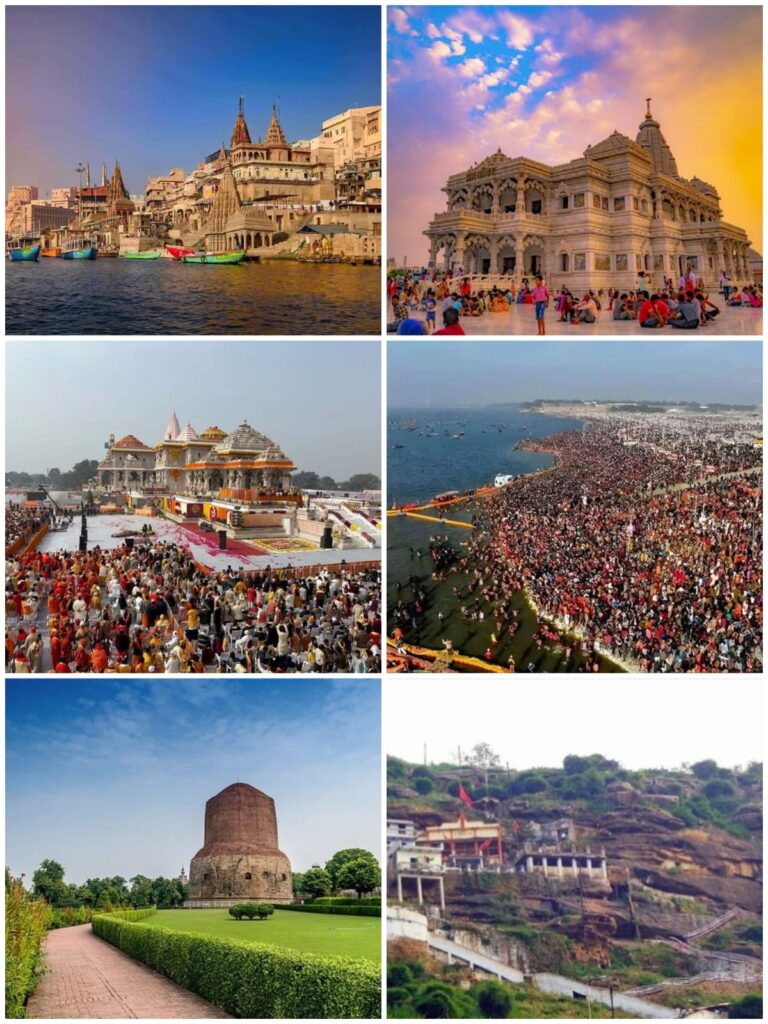
Exploring the Spiritual Soul of Uttar Pradesh
Uttar Pradesh, often referred to as the spiritual heart of India, is a land steeped in myth, devotion, and sacred traditions. From ancient temple towns to vibrant pilgrimage centers, this state offers a profound journey through the spiritual fabric of India.
Whether you are a devotee seeking blessings or a traveler looking to explore India’s divine heritage, Uttar Pradesh welcomes you with open arms and timeless stories.
🛕 1. Varanasi(Kashi) – The Eternal City on the Ganges
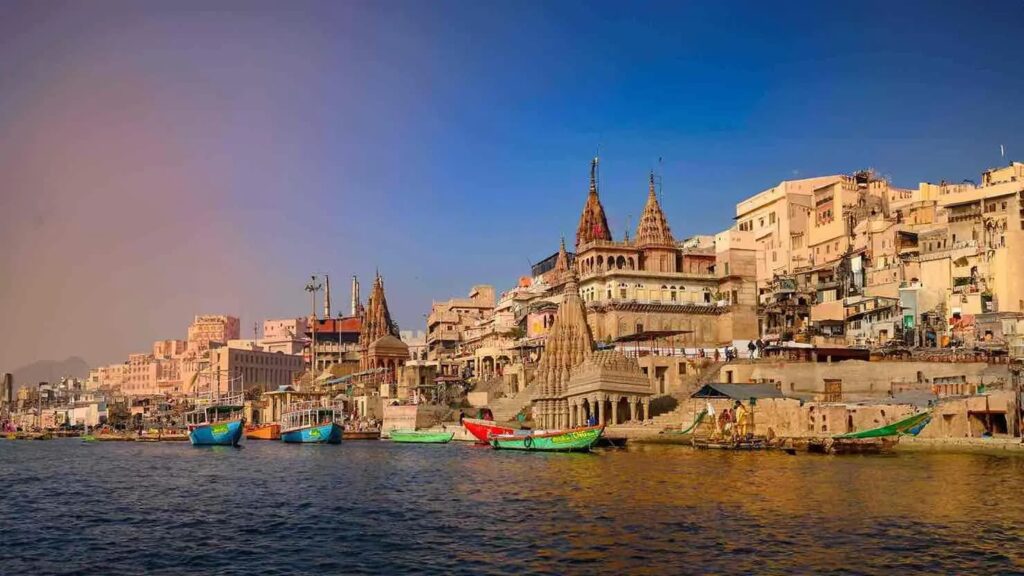
One of the oldest living cities and a major Hindu pilgrimage site, Varanasi is renowned for its ghats (stone staircases leading to the river) and temples. The Kashi Vishwanath Temple, dedicated to Lord Shiva, is a major attraction, and witnessing the evening Ganga Aarti (prayer ceremony) is a truly captivating experience. The city is believed to be a place where death leads to liberation from the cycle of rebirth.
🌅 Dawn on the Ghats
Varanasi’s magic begins at daybreak when the first light teases the Ganges. A sunrise boat ride offers a front-row seat to pilgrims bathing, sadhus meditating, and laundry and rituals unfolding in perfect harmony with the new day — an experience that visitors and guides consistently rate as “unmissable”.
The glow of golden light on ancient steps and temples is nothing short of transcendent.
🕉️ The Heartbeat of Divine Rituals
One of the most iconic experiences is watching the Ganga Aarti at Dashashwamedh Ghat. Every evening, priests wield tiered lamps and chant to honor the River Goddess. It’s a sensory spectacle — fire, incense, and devotion — that many travelers describe as life-changing.
Watching from a boat adds a personal, riverside touch to this spiritual performance.
⚱️ Between Life & Death: Burning Ghats
Varanasi is inseparably linked to the concept of moksha (liberation). At Manikarnika and Harishchandra Ghats, funeral pyres burn ceaselessly — a stark, poignant reminder of life’s fragility. Witnessing this can be deeply moving; respectful observation is essential.
🛍️ Blending Spirituality & Craftsmanship
Head into the weaving lanes and dusty bazaars to discover Banarasi silk — those breathtaking sarees woven for generations by Muslim Ansari artisans, now protected under GI status . Local markets like Thatheri Bazaar brim with stalls selling textiles, religious artifacts, and paan — each offering a slice of Banaras’ vibrant local culture.
🤸♂️ Local Vibes: Yoga, Cricket & Festivals
Start your day with a free yoga session at Assi Ghat, where local gurus lead breathing and laughter yoga — a perfect blend of energy and zen. Walk through narrow, bustling alleyways, catch local kushti (wrestling) matches in akhadas, and maybe even join a game of cricket on the steps — the city’s lively spirit is contagious.
Varanasi is also a city of festivals: Ganga Mahotsav (October–November) brings classical music, dance, and a riverfront craft fair; Dev Deepavali lights up all the ghats with thousands of diyas, symbolizing a divine descent. Annual reenactments like Nag Nathaiya add unique cultural flavors.
🍽️ Delightful Street Food
Your senses will soar at every corner. Try ultra-affordable dishes like puri-aloo breakfast or spicy kachoris in narrow lanes. Don’t miss “Blue Lassi” — a flagship dairy shop offering vibrant, fruit-flavored lassis since 1925 — it’s downright Instagram-famous.
🕌 Must-Visit Landmarks
Kashi Vishwanath Temple: The spiritual center of the city.
Nepali Mandir: A 19th-century pagoda-style temple built by Nepalese royals.
Sarnath: Site where Buddha first taught, just 10 km away.
For a peaceful escape from the crowds, visit the Banaras Hindu University campus and its New Vishwanath Temple — a modern yet serene cornerstone in the city’s cultural tapestry.
Why Varanasi Matters
This ancient city — one of the oldest continuously inhabited in the world — offers more than just spiritual spectacle. It’s a living tapestry of daily life, faith, art, and human drama, where contrasts exist side-by-side: life and death, noise and silence, uncleanliness and divine glow.
Final Thoughts
Varanasi leaves a mark that’s hard to describe. Whether it’s the electric atmosphere of Ganga Aarti, the quiet intensity of sunrise rituals, the sensory overload of street food, or the hypnotic chants and prayers echoing off ancient stones — this city seeps into your soul. As one traveler put it, it felt like a “life‑changing, out‑of‑body experience”.
🦚 2. Mathura & Vrindavan – Land of Lord Krishna
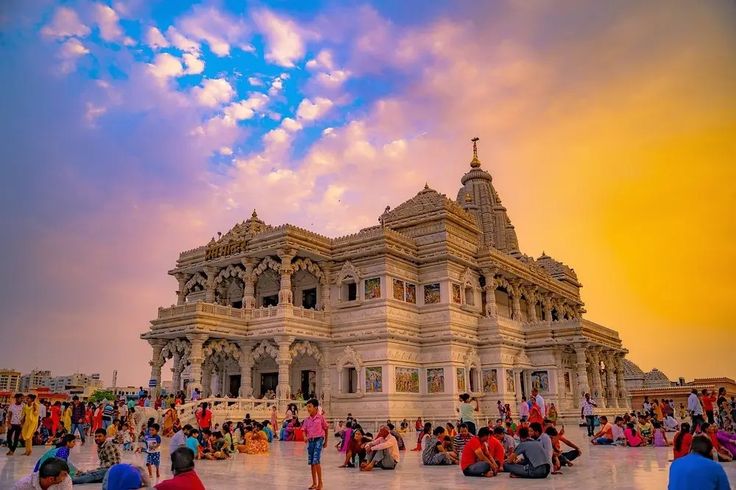
The twin cities of Mathura and Vrindavan are synonymous with Lord Krishna’s divine presence. From the Janmabhoomi Temple (birthplace of Krishna) to the lively Banke Bihari Temple and serene ISKCON Temple, these towns echo with bhajans, festivals, and spiritual devotion all year round.
🌟 Day 1: Dive into Krishna’s Birthplace – Mathura
🚗 Sunrise Arrival & Shri Krishna Janmabhoomi
Begin your pilgrimage at Krishna Janmabhoomi Temple, the revered birthplace of Lord Krishna. Experience the sanctity of the prison cell and the serene atmosphere around the Yamuna Ghats
🕉️ Dwarkadhish Temple Marvel
Just a short tuk‑tuk ride away lies the Dwarkadhish Temple, famed for its intricate black‑marble architecture and regal aura
🏰 History at Kans Qila
Explore the ruins of Kans Qila, believed to be the citadel of demon‑king Kansa, and admire its blend of Rajput and Mughal architecture
🍽️ Street‑Food Feast
Savor local gems like bedai‑kachori, Mathura peda, jalebi, and aloo sabzi at iconic spots: Brijwasi Sweets, Shankar Mithaiwala, Omai Pehalwan
🚤 Evening Yamuna Aarti
End the day with a calming boat ride at Vishram Ghat, greeted by the voiced prayers and quiet devotion of the evening aarti
🌄 Day 2: The Divine Lanes & Temples of Vrindavan
🛕 Early Aarti & Banke Bihari Temple
Begin with the popular early-morning aarti at Banke Bihari Temple—to avoid crowds, visit on a weekday morning
✨ Prem Mandir’s Glittering Evenings
Visit the majestic white marble Prem Mandir in the evening to witness a synchronized light‑and‑sound show depicting Radha‑Krishna’s eternal love
🏛️ Time‑Travel Through Temples
Don’t miss architectural gems like Radha Raman, Radha Madanmohan (from 1580 CE) and the serene ISKCON Krishna‑Balaram Temple
🚶♂️ Vrindavan Parikrama
Embark on a 13 km barefoot parikrama across the seven Goswami temples—an immersive pilgrimage that can be done in ~3 hours
💖 Why This Journey Matters
This twin‑city sojourn blends spiritual awakening, historical depth, sensory delights, and simple joys:
Soul‑Stirring Rituals: Sunrise temple visits and parikramas offer direct communion with Krishna’s legacy.
Vibrant Heritage: From ancient temples to ruined forts, every corner echoes centuries of devotion.
Cultural Feasting: A kaleidoscope of flavors—from humble kachori carts to divine sattvic meals.
- Immersive Atmosphere: Engage in chants, aartis, and temple life—turning travel into an intimate experience.
📌 Suggested Itinerary
One-Day Express: Early train/cab, Mathura’s Janmabhoomi + Dwarkadhish, evening Vishram Ghat, return.
Two-Day Bliss:
Day 1: Mathura temples + street food + Yamuna aarti.
Day 2: Vrindavan parikrama, Banke Bihari aarti, Prem Mandir, ISKCON, light show.
🏹 3. Ayodhya – Birthplace of Lord Rama
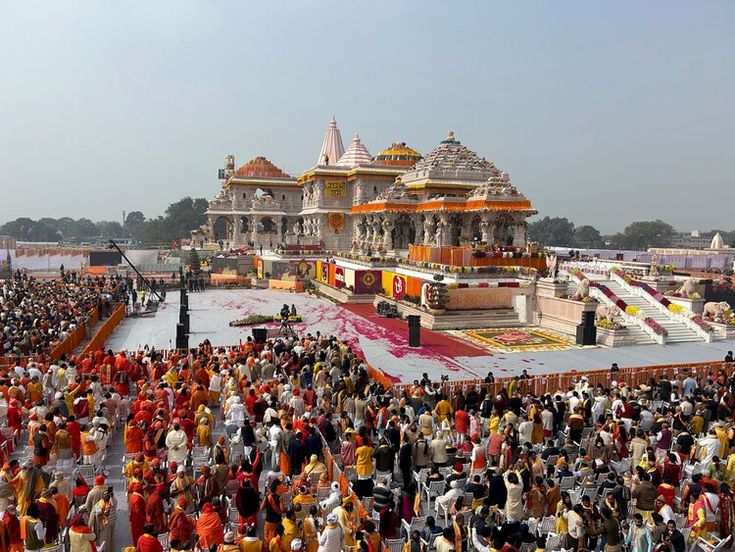
Nestled on the banks of the sacred Sarayu River in Uttar Pradesh, Ayodhya is more than just a city — it is a symbol of India’s spiritual heart, historical depth, and contemporary transformation. Revered as the birthplace of Lord Rama, the protagonist of the epic Ramayana, Ayodhya has long occupied a central place in Hindu religious consciousness. But beyond its mythological importance, Ayodhya is also a mirror reflecting India’s evolving identity.
Now a grand spiritual hub with the recently constructed Ram Mandir, Ayodhya holds deep significance in Hindu mythology. Pilgrims visit this sacred city to walk the same soil that bore witness to the epic Ramayana and the divine birth of Lord Rama.
A City of Legends
Ayodhya, also known as Saket in ancient texts, is one of the seven sacred cities (Sapta Puri) in Hinduism. According to the Ramayana, it was the capital of the Kosala kingdom and the birthplace of Lord Rama, the seventh avatar of Vishnu. The name Ayodhya means “the unconquerable,” derived from Sanskrit — an apt description for a city that has endured centuries of change, conflict, and continuity.
The Skanda Purana and Ramcharitmanas vividly describe the glory of Ayodhya as a city adorned with palaces, gardens, and temples, exuding a divine aura. Even today, pilgrims walk the Ram Janmabhoomi path, reliving the life and journey of Lord Rama through temples like Kanak Bhawan, Hanuman Garhi, and Nageshwarnath Temple.
Historical and Political Significance
While Ayodhya is primarily known through mythology, it also holds immense archaeological and historical interest. Ancient Buddhist and Jain texts mention Ayodhya, and excavations have revealed layers of civilizations dating back to the 6th century BCE.
In modern history, Ayodhya became the epicenter of a national conversation when the Babri Masjid, built in 1528 by Mughal commander Mir Baqi, became a subject of dispute. The claim that it was built on the birthplace of Lord Rama sparked a decades-long legal and political battle, culminating in the Supreme Court’s 2019 verdict, which cleared the way for the construction of a grand Ram Temple on the disputed site.
The Ram Mandir and Ayodhya’s Renaissance
Since the groundbreaking ceremony in 2020, Ayodhya has been undergoing a transformation. The Ram Mandir, a majestic structure blending ancient Indian architecture with modern techniques, is set to become one of the most iconic religious sites in the world. Alongside the temple, the government is investing in infrastructure, tourism, and urban development to turn Ayodhya into a global pilgrimage and heritage city.
This revitalization is also symbolic — it represents a cultural reawakening and a reclaiming of identity for many. However, it also invites reflection on how a city so sacred can continue to embrace inclusivity and harmony in a diverse nation.
Ayodhya Today: More Than a Pilgrimage
Ayodhya today is not just a spiritual destination but a place where faith meets modernity. New hotels, museums, ghats, and digital infrastructure are redefining the city’s profile. Cultural festivals like Deepotsav, which lights up the city with millions of diyas, are attracting global attention.
Yet, what makes Ayodhya truly special is not just its ancient past or its future prospects — but its power to stir devotion, imagination, and dialogue across generations.
Final Thoughts
Ayodhya is a city that lives in the hearts of millions — as a birthplace, a battleground, a vision, and a home. Whether you’re a pilgrim, a history enthusiast, or a curious traveler, Ayodhya invites you to experience not just its monuments, but the living spirit of India’s enduring cultural soul.
🌊 4. Prayagraj (Allahabad) – The Sacred Confluence of History, Faith, and Culture
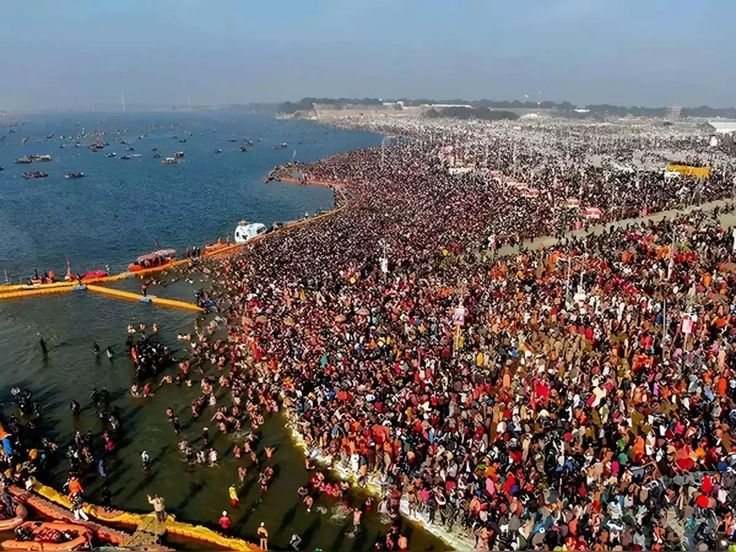
At the meeting point of the Ganga, Yamuna, and the mythical Saraswati, Prayagraj hosts the Kumbh Mela, the largest spiritual gathering on Earth. Visit the Triveni Sangam, Anand Bhavan, and ancient ashrams where saints still reside.
Located in the heart of Uttar Pradesh, Prayagraj (formerly Allahabad) stands as one of the most spiritually significant and historically rich cities in India. Revered as the land of the Triveni Sangam — the meeting point of the Ganga, Yamuna, and the mystical Saraswati rivers — Prayagraj is a place where mythology meets reality, where kings and sages once walked, and where faith continues to inspire millions.
The Sacred Sangam and Kumbh Mela
At the center of Prayagraj’s spiritual identity lies the Triveni Sangam. According to Hindu belief, taking a dip at this holy confluence cleanses one of sins and grants moksha (liberation). Every year, thousands of devotees gather here for Magh Mela, but it’s the Kumbh Mela that puts Prayagraj on the global map.
Held once every 12 years, the Kumbh Mela in Prayagraj is the largest human gathering on Earth, attracting tens of millions of pilgrims, saints, tourists, and seekers from across the globe. The UNESCO-recognized festival is a vibrant expression of India’s ancient spiritual heritage.
Historical and Cultural Legacy
Prayagraj’s significance goes beyond religion. It was known as Prayag in ancient texts and described as the king of all pilgrimage sites (Tirthraj). It has seen the rise and fall of many empires — from the Mauryas and Guptas to the Mughals and British.
The city has also played a crucial role in India’s freedom struggle. It was the birthplace of the Nehru-Gandhi family and home to Anand Bhavan, now a museum that tells the story of India’s journey to independence.
Famed writers and poets such as Harivansh Rai Bachchan, Mahadevi Verma, and Sumitranandan Pant added to the literary legacy of this vibrant city. It’s also an educational hub, hosting institutions like Allahabad University, one of the oldest universities in India.
Spiritual Hotspots in Prayagraj
While the Sangam is the spiritual heart of the city, Prayagraj is home to many other revered temples and landmarks:
Akshayavat (The Immortal Banyan Tree): Believed to be indestructible and a witness to cycles of creation and destruction.
Bade Hanuman Mandir: A unique temple housing a reclining idol of Lord Hanuman.
Alopi Devi Temple: A mystical site where the deity is represented by a wooden carriage rather than an idol.
Khusro Bagh: A Mughal-era garden and tomb complex rich in Indo-Islamic architecture.
Modern-Day Prayagraj: A City in Transition
Today, Prayagraj is undergoing a transformation. With enhanced infrastructure, better road and rail connectivity, the development of riverfronts, and beautification projects around the Sangam, the city is being reshaped into a modern spiritual and cultural hub.
During recent Kumbh Melas, digital initiatives, sanitation efforts, and eco-friendly practices have shown how tradition can harmoniously meet innovation. The city’s growing tourism sector is also drawing history lovers, spiritual travelers, and cultural explorers alike.
Conclusion: A Journey to the Eternal
Prayagraj is not just a city; it is an experience of timeless devotion, rich heritage, and evolving identity. Whether you’re here to take a holy dip, explore India’s ancient past, or witness a cultural spectacle like the Kumbh Mela, Prayagraj offers a journey that touches both soul and senses.
In Prayagraj, every grain of sand has a story, every prayer echoes across centuries, and every sunrise over the Sangam brings hope, peace, and renewal.
☸️5.Sarnath: Where the Buddha Turned the Wheel of Dharma
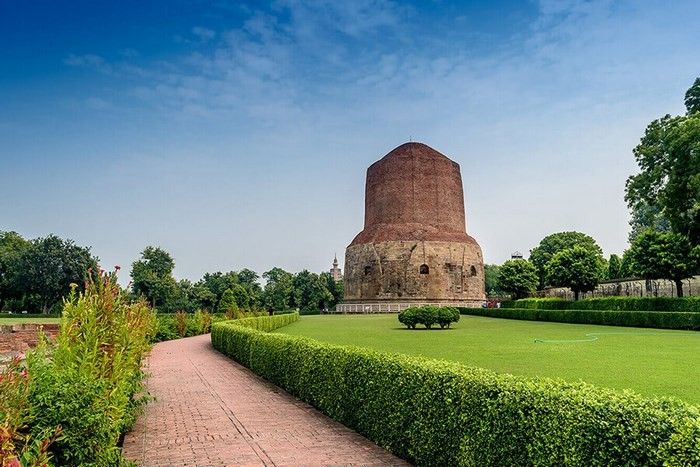
Just a few kilometers from the holy city of Varanasi, lies Sarnath — a tranquil and sacred site that holds immense importance in the world of Buddhism. It was here, over 2,500 years ago, that Gautama Buddha delivered his first sermon after attaining enlightenment, setting in motion the spiritual revolution that became Buddhism.
A Sacred Beginning
Sarnath, known as Isipatana in ancient times, is one of the four holiest Buddhist pilgrimage sites in the world, along with Lumbini (Nepal), Bodh Gaya (Bihar), and Kushinagar (U.P.). According to Buddhist tradition, it was at Sarnath that Buddha taught the Dhamma-Chakra Pravartana Sutra (Turning of the Wheel of Dharma) to his first five disciples, laying the foundation of the Sangha (the community of monks).
The calm and spiritually charged atmosphere of Sarnath continues to attract seekers, monks, historians, and travelers from around the world.
Key Attractions in Sarnath
🏛 Dhamek Stupa
One of the most prominent structures in Sarnath, the Dhamek Stupa was built in 500 CE and marks the exact spot where Buddha gave his first sermon. This massive cylindrical stupa is intricately carved with floral patterns and inscriptions and remains a centerpiece of Buddhist reverence.
🧘♂️ Mulagandha Kuti Vihara
A modern temple built by the Mahabodhi Society, this vihara houses beautiful frescoes painted by Japanese artist Kosetsu Nosu and a striking golden statue of the Buddha. It also hosts prayer ceremonies and spiritual gatherings.
🧱 Ashoka Pillar
Erected by Emperor Ashoka, a key patron of Buddhism, the Ashoka Pillar at Sarnath symbolizes peace and tolerance. Though the original lion capital is now preserved in the Sarnath Museum, it famously became the national emblem of India.
🗿 Sarnath Archaeological Museum
Home to an impressive collection of sculptures, relics, and inscriptions from the Maurya, Gupta, and Kushan periods, the museum is a must-visit for those interested in Buddhist art and Indian heritage.
🌿 Deer Park (Mriga Dava)
The name Sarnath is often linked with the deer park where Buddha preached, as legend says deer would peacefully roam the area during his sermons. Today, a beautifully maintained park pays homage to this memory.
Spiritual Harmony and Global Significance
Sarnath isn’t just a Buddhist site — it is a global symbol of peace, compassion, and coexistence. Monasteries from Tibet, Thailand, Japan, Myanmar, Sri Lanka, and Cambodia have been built here, representing the international scope and unity of Buddhism.
The peaceful chants of monks, fluttering prayer flags, and serene gardens create an ambiance ideal for meditation and introspection.
Sarnath Today: A Modern Pilgrimage
Modern infrastructure and eco-tourism efforts have made Sarnath a more accessible and comfortable destination for visitors. It’s often combined with trips to Varanasi, making it perfect for spiritual tourists and heritage lovers alike.
Every year, festivals like Buddha Purnima and Dhamma Chakra Day attract global pilgrims and tourists, offering a unique cultural and spiritual experience.
Conclusion: A Journey of Enlightenment
Sarnath is more than an archaeological site or religious destination — it’s a place where enlightenment began, where silence speaks volumes, and where the teachings of compassion, mindfulness, and inner peace still echo. Whether you’re a spiritual seeker, history enthusiast, or curious traveler, a visit to Sarnath is a journey into the soul of humanity.
🗻6.Chitrakoot: The Eternal Abode of Faith and Nature
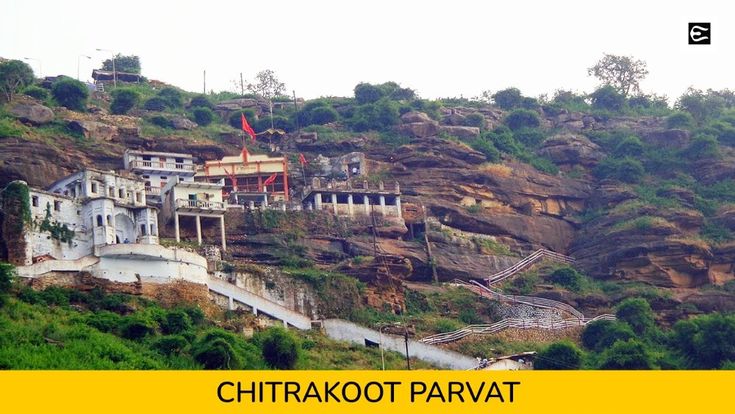
Tucked along the border of Uttar Pradesh and Madhya Pradesh, Chitrakoot is one of India’s hidden spiritual gems — a tranquil town that blends mythology, devotion, and natural beauty in the most serene way. Often overshadowed by bigger pilgrimage destinations, Chitrakoot remains sacred in the hearts of devotees as the place where Lord Rama, Sita, and Lakshmana spent over 11 years of their exile.
A land where rivers sing hymns, forests whisper ancient stories, and every hill echoes with the divine, Chitrakoot is where divinity meets the earth.
🕉️ Chitrakoot in the Ramayana
Chitrakoot, meaning “Hill of Many Wonders,” holds a special place in the epic Ramayana. It was here that Lord Rama performed the last rites of his father, King Dasharatha, and spent the most peaceful years of his exile amidst the forests and hermitages.
Great sages like Atri, Anusuya, Valmiki, and Bharat walked these lands, and it was here that Bharat came to plead with Rama to return to Ayodhya — a moment immortalized at Bharat Milap Temple.
🌿 Spiritual and Scenic Highlights of Chitrakoot
🏞️ Ram Ghat
The heart of Chitrakoot, Ram Ghat on the banks of the Mandakini River is a serene place where Lord Rama is said to have bathed. Pilgrims gather here at sunrise and sunset for soulful aartis, boat rides, and spiritual reflection.
🛕 Kamadgiri
“Hill that Fulfills Wishes,” Kamadgiri is believed to be the original Chitrakoot and the central pilgrimage site. Devotees perform a 5 km parikrama (circumambulation) of this forest-covered hill, stopping at various temples along the way.
🙏 Bharat Milap Temple
Located near Kamadgiri, this temple marks the poignant meeting of Bharat and Lord Rama. It’s a powerful reminder of duty, sacrifice, and family devotion.
🕉️ Hanuman Dhara
Perched atop a hill, this sacred spring is associated with Lord Hanuman, who is believed to have cooled himself here after burning Lanka. A steep climb rewards pilgrims with panoramic views and spiritual bliss.
👣 Sati Anusuya Ashram
Dedicated to Anusuya, the devoted wife of Sage Atri, this peaceful ashram is nestled deep in the forests, known for stories of sacrifice and divine miracles.
🧘♂️ Gupt Godavari
A mystical cave where Lord Rama and Lakshmana are believed to have held court. Crystal-clear underground streams and narrow passageways add to its wonder and sanctity.
📿 A Land of Pilgrimage and Peace
What sets Chitrakoot apart is its peaceful, untouched atmosphere. There are no giant crowds or commercialized shrines — only simple temples, natural beauty, and a spiritual aura that encourages introspection and calm.
Many seekers, saints, and sages have chosen Chitrakoot as their spiritual retreat. Even today, you’ll see sadhus meditating under trees, chanting mantras along the ghats, and locals offering prayers with pure devotion.
🛕 Festivals and Events
Ram Navami and Diwali are celebrated with great fervor.
The Bharat Milap fair, held annually, draws thousands to witness theatrical reenactments of the Ramayana.
Amavasya (new moon) is considered highly auspicious for bathing in the Mandakini River.
🌄 Chitrakoot Today: A Spiritual Getaway
With improved connectivity, simple lodging, and eco-spiritual tourism, Chitrakoot is welcoming more travelers seeking quiet spirituality and nature. It remains a perfect offbeat destination for those who want to walk in the footsteps of Lord Rama and experience a slice of divine India without the rush of big cities.
✨ Final Thoughts: Where the Divine Meets the Natural
Chitrakoot is not just a place on the map — it’s a feeling, a story, a journey back to simplicity, devotion, and timeless wisdom. Whether you’re a pilgrim, a nature lover, or someone in search of spiritual peace, Chitrakoot welcomes you with open arms and a sacred silence.
Here, every river is a hymn, every tree a scripture, and every path leads to the divine.